A hot spot on a dog is a red, moist, inflamed patch of skin that appears suddenly and can double in size within hours. Veterinarians call this condition acute moist dermatitis, and it usually starts when something makes a dog lick, chew, or scratch one area until the skin breaks down and bacteria move in. Hot spots are painful, they spread quickly, and they rarely clear up on their own once infection sets in. Here in Fort Lauderdale, heat, humidity, frequent swimming, and year-round allergens make these sores especially common, particularly in thick-coated breeds. At Park Veterinary Hospital, we see hot spots in every season, and early care almost always means faster healing and less discomfort for your pet. Below, we’ll explain what a hot spot on a dog actually is, how to recognize one, what triggers them, how veterinarians treat them, and what you can do to lower your dog’s risk going forward.
What Is a Hot Spot on a Dog?
Simply put, a hot spot is a localized skin infection that a dog’s own licking and scratching makes worse.
The process usually begins with an itch. Your dog chews or scratches the area, which damages the outer layer of skin. Moisture from saliva and broken skin, combined with warmth trapped under the fur, creates an ideal setting for bacteria that normally live on the skin to multiply. The infection makes the area itchier and more painful, so your dog keeps licking, and the cycle feeds itself.
Why Hot Spots Grow So Fast
What sets a hot spot on a dog apart from other skin problems is speed. A patch the size of a coin in the morning can spread to the size of your palm by evening. The surrounding hair often mats over the wound and hides how large the damaged area has become, so many owners are surprised by the true size once the fur is clipped away.
Which Dogs Get Them Most Often?
Any dog can develop a hot spot, but some are more prone than others. Golden retrievers, Labrador retrievers, German shepherds, Newfoundlands, and other breeds with dense undercoats hold moisture against the skin. Dogs with allergies, dogs that swim often, and dogs with long or matted coats also face a higher risk, which describes a large share of pets in South Florida.
What Does a Hot Spot Look Like on a Dog?
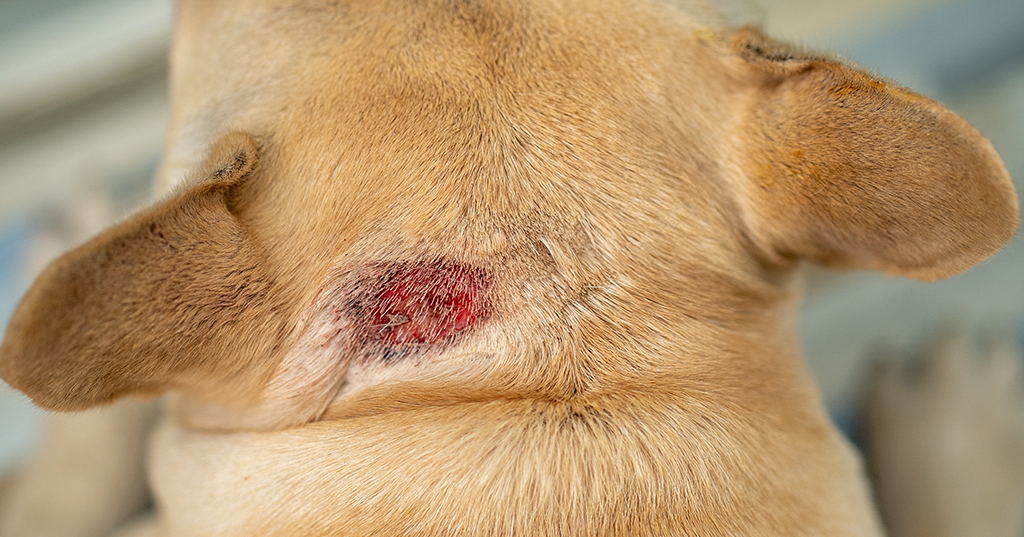
A hot spot on a dog is usually easy to see once you know what to look for, though thick fur can hide the early stages.
Common signs of a hot spot on a dog include:
- A clearly defined patch of red, raw, or glistening skin
- Oozing fluid or pus that dries into a crust
- Matted or wet-looking fur over a single area
- Sudden hair loss in a circular or irregular patch
- An unpleasant odor coming from one spot on the coat
- Obsessive licking, chewing, or scratching at the same location
- Flinching, whining, or pulling away when the area is touched
Where Hot Spots Usually Appear
A hot spot on a dog tends to form on the head, neck, cheeks, hips, base of the tail, and the outside of the thighs. The location can offer clues about the cause. A sore below the ear may point to an ear infection, while a patch near the tail base often relates to fleas or anal gland discomfort.
Conditions That Can Look Similar
Ringworm, deep skin infections, skin tumors, and certain immune-related conditions can resemble a hot spot at first glance. Because these problems require very different treatments, a veterinary exam is the most reliable way to confirm what you’re seeing.
What Causes Hot Spots on Dogs?
Nearly every hot spot on a dog starts with something that makes a dog want to lick or scratch, so the real question is what set off that urge.
Frequent triggers include:
- Flea bites, which can cause intense itching in sensitive dogs
- Environmental allergies to pollen, grass, mold, or dust mites
- Food allergies that inflame the skin from the inside
- Ear infections that lead to scratching around the head and neck
- Anal gland problems that cause licking near the tail
- Moisture trapped under the coat after swimming, bathing, or rain
- Matted fur, insect bites, or small scrapes and punctures
- Joint pain, boredom, or stress that leads to repetitive licking
The Role of Allergies
Allergies sit behind a large percentage of hot spot cases. An allergic dog’s skin is already inflamed and itchy, so a small scratch can quickly turn into an open sore. Dogs that get one hot spot after another often have an allergy that hasn’t been fully identified or controlled. When a hot spot on a dog keeps coming back in the same season each year, that pattern is worth discussing with your veterinarian.
South Florida Weather Makes It Worse
Fort Lauderdale’s warm temperatures and high humidity keep skin and fur damp for longer, which helps bacteria thrive. Afternoon storms, pool time, and beach days add even more moisture to the mix.
How Do Veterinarians Treat a Hot Spot on a Dog?
Professional hot spot treatment for dogs focuses on two goals: healing the infected skin and stopping whatever caused the itch in the first place.
Cleaning and Assessing the Area
Your veterinarian will usually clip the fur around the hot spot to reveal its full size and allow air to reach the skin. Because these sores are painful, some dogs need mild sedation for this step. The area is then cleaned with a gentle antiseptic solution. Your veterinarian may also take a skin sample to check for bacteria, yeast, or mites if the sore looks unusual or keeps returning.
Medications That Support Healing
Depending on the severity, treatment may include prescription topical medications, oral antibiotics for deeper infections, and medications that reduce inflammation and itching. Calming the itch matters just as much as treating the infection, since continued licking will undo healing progress. Many dogs also go home with a protective cone or recovery collar to keep their mouth away from the wound while it heals.
Treating the Underlying Cause
Clearing up one hot spot on a dog doesn’t help much if the trigger remains. Your veterinarian may recommend flea control, ear infection treatment, allergy testing, or a diet trial to address the root problem. For dogs with ongoing itching, dog allergy relief at Park Veterinary Hospital can include long-term plans that reduce flare-ups and future hot spots.
Please avoid applying human creams, essential oils, or other household products to a hot spot without veterinary guidance. Some of these can irritate broken skin or be harmful if your dog licks them off.
How Can You Prevent Hot Spots on Dogs?
You can’t eliminate every risk, but a few consistent habits make a hot spot on a dog much less likely.
Stay on Top of Grooming
Regular brushing removes loose undercoat and prevents mats that trap heat and moisture against the skin. Professional grooming can be especially helpful for thick-coated breeds during South Florida’s long summer. After swims, baths, or rainy walks, make sure your dog’s coat dries completely, particularly in dense areas like the neck, hips, and tail base.
Use Parasite Prevention Year-Round
Fleas never truly take a season off in Fort Lauderdale. Year-round flea and tick prevention recommended by your veterinarian removes one of the most common hot spot triggers.
Keep Allergies and Ear Problems Under Control
Dogs with allergies benefit from a management plan that’s followed consistently, even when symptoms seem quiet. Routine wellness visits also help catch ear infections, anal gland issues, and early skin changes before they lead to licking and scratching.
Support Your Dog’s Mental Health
Daily exercise, puzzle toys, and time spent together can reduce boredom and stress licking. If your dog licks out of anxiety, your veterinarian can talk through behavior strategies and other options.
Fast Help for Hot Spots in Fort Lauderdale
A hot spot on a dog can go from a small pink patch to a large, painful wound in a single afternoon, so quick action makes a real difference. The sooner the infection is cleaned and treated, the sooner your dog feels relief and the less likely the sore is to spread. Just as important, identifying the reason behind the itch helps prevent the next one from forming.
If you notice a red, moist, or smelly patch on your dog’s skin, the team at Park Veterinary Hospital is ready to help. We’ll examine the area, provide treatment that brings comfort quickly, and work with you on a plan to address the underlying cause. Call to schedule a visit and get your dog back to feeling like themselves again.