

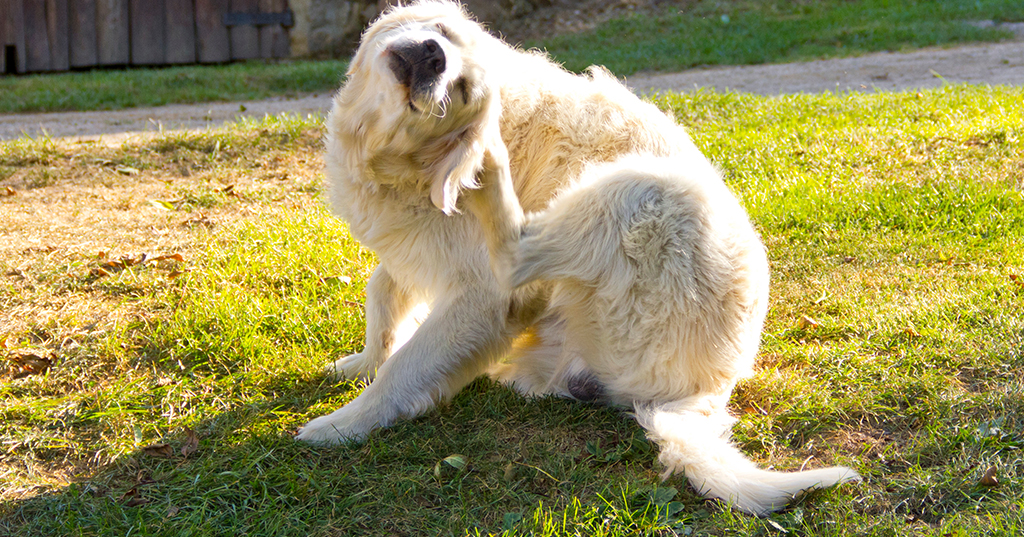
If your dog keeps scratching ear and licking paw spots throughout the day, allergies are the most likely cause. Environmental allergies, food sensitivities, and the ear or skin infections that often follow them account for most cases of this itchy combination. The ears and paws are two of the first places allergic inflammation shows up, so dogs often target both at once. Parasites, anxiety, and other skin conditions can produce the same behavior, which means the cause isn’t always obvious from home. At Park Veterinary Hospital in Fort Lauderdale, we treat itchy dogs year-round, thanks to South Florida’s long pollen seasons, high humidity, and busy flea population. In this guide, we’ll explain why dogs scratch and lick, which warning signs call for an exam, how veterinarians pinpoint the source of the itch, and what professional treatment looks like for a dog that can’t seem to get comfortable.
Why Does My Dog Keep Scratching Their Ear and Licking Their Paw?
Several different conditions can make a dog scratch at the ears and lick the feet, and many of them overlap.
Environmental Allergies (Atopic Dermatitis)
Environmental allergies are the top reason a dog keeps scratching ear and licking paw areas. Pollen, grasses, mold spores, and dust mites trigger an immune response that inflames the skin, especially on the paws, ears, armpits, and belly. In Fort Lauderdale, the warm climate means many of these allergens never fully disappear, so symptoms can linger for months instead of weeks.
Common itch triggers for South Florida dogs include:
- Grass and weed pollens from lawns, parks, and dog beaches
- Mold spores that thrive during humid, rain-soaked months
- Indoor dust mites and household dander
- Flea saliva, which can cause intense itching from a single bite
Food Allergies
Food allergies are less common than environmental allergies, but they create a very similar pattern. Dogs sensitive to a protein source such as chicken, beef, or dairy often develop recurring ear infections and itchy feet that don’t follow the seasons. If your dog’s symptoms stay steady all year, diet may be part of the picture.
Yeast and Bacterial Infections
Allergies rarely act alone. Inflamed skin gives yeast and bacteria the perfect environment to overgrow, which leads to odor, redness, discharge, and even more itching. This cycle explains why a dog keeps scratching ear and licking paw spots long after the original trigger fades.
Parasites
Ear mites, fleas, and mange mites all cause relentless itching. Ear mites spread easily between pets and often leave dark, crumbly debris inside the ear canal.
Boredom, Anxiety, and Pain
Some dogs lick their paws out of stress or boredom, and the habit can turn compulsive. Paw licking can also point to joint pain, a foreign object like a grass seed, or an injured nail.
When Should You Call the Vet About an Itchy Dog?
A quick scratch after a walk is normal, but persistent or intense itching deserves professional attention. If your dog keeps scratching their ear and licking their paw for more than a few days, it’s time to book a visit.
Signs that your dog needs an exam soon:
- Frequent head shaking, ear rubbing, or holding the head tilted to one side
- A sour, yeasty, or foul smell coming from the ears or feet
- Brown, yellow, or bloody discharge in the ear canal
- Red-brown staining on the fur between the toes
- Hair loss, scabs, open sores, or thickened, darkened skin
- Limping or reluctance to put weight on a foot
- A puffy, swollen ear flap
Why Early Care Makes a Difference
Chronic ear infections can damage the ear canal over time, causing narrowing, scarring, and, in severe cases, hearing loss. Constant licking wears down the skin’s protective barrier and opens the door to deeper infections. Vigorous head shaking can even rupture a blood vessel in the ear flap, creating a fluid-filled swelling called an aural hematoma that often requires surgery. When a dog keeps scratching ear and licking paw areas for weeks before getting help, treatment usually takes longer and costs more. Scheduling an exam early typically leads to a shorter, simpler plan and faster relief for your pet.
When Itching Becomes an Emergency
Contact a veterinarian right away if your dog suddenly loses balance, develops a new head tilt, walks in circles, has bleeding that won’t stop, or shows facial swelling, hives, or difficulty breathing. These signs can indicate a middle or inner ear problem or a serious allergic reaction that needs same-day care.
How Do Veterinarians Find the Cause of Ear Scratching and Paw Licking?
Because so many itchy conditions look alike, an accurate diagnosis is the foundation of effective care. Guessing at the cause often leads to temporary improvement followed by a frustrating flare-up.
When a dog keeps scratching ear and licking paw spots, your veterinarian may recommend:
- An otoscopic exam to view the ear canal and check the eardrum
- Ear cytology, which identifies yeast, bacteria, or mites under a microscope
- Skin scrapings or tape samples to look for mites and surface infection
- Culture and sensitivity testing for stubborn or recurring infections
- Allergy testing to identify specific environmental triggers
- A food elimination trial supervised by your veterinary team
Your Dog’s History Tells Part of the Story
Your observations at home are just as valuable as lab results. Before your appointment, think about when the itching started, whether it gets worse during certain months, and whether you’ve changed foods, treats, or cleaning products recently. Let your veterinarian know if other pets in the household are scratching too, since that may suggest fleas or mites. Photos of red paws or ear discharge on a bad day can also help, especially if symptoms come and go.
Answers to these questions help your veterinarian decide which tests make the most sense. A dog with seasonal symptoms that started in spring points toward environmental allergies, while year-round ear trouble may raise suspicion of a food sensitivity. Putting the history and test results together gives your pet the best chance at a treatment plan that actually works.
What Treatment Helps a Dog That Keeps Scratching Their Ears and Licking Their Paws?
Treatment depends entirely on the underlying cause, which is why a veterinary exam always comes first. Most dogs need a plan that tackles the immediate itch and the root problem at the same time.
Clearing Up Active Infections
If yeast or bacteria are present, your veterinarian will typically start by resolving the infection. This may include a thorough in-clinic ear cleaning, prescription ear medication, medicated shampoos, or oral medications chosen based on cytology or culture results. Follow-up visits confirm that the infection has fully cleared rather than simply quieting down.
Calming the Itch Quickly
Newer prescription anti-itch medications and injectable therapies target the specific signals that drive itching in allergic dogs. These options can bring noticeable comfort within days, giving irritated skin a chance to heal while your veterinary team addresses the bigger picture. Because some over-the-counter and human products can be unsafe for pets, always check with your veterinarian before trying anything new.
Managing Allergies for the Long Haul
Allergies can’t usually be cured, but they can be controlled. Depending on your dog’s needs, a long-term plan might include allergy immunotherapy based on test results, a prescription or limited-ingredient diet, year-round flea and parasite prevention, and routine rechecks during peak allergy seasons. Learn more about dog allergy relief at Park Veterinary Hospital and how our team builds individualized plans for itchy pets.
Addressing Behavioral Licking
When medical causes have been ruled out, compulsive licking may stem from anxiety or boredom. Your veterinarian can discuss enrichment ideas, behavior support, and, when appropriate, medications that help anxious dogs feel more settled.
Itch Relief for Fort Lauderdale Dogs Starts With an Exam
When a dog keeps scratching ear and licking paw spots day after day, the discomfort affects their sleep, mood, and overall quality of life. The good news is that most causes of itching respond well to treatment once the source is identified. Allergies, infections, and parasites are all manageable with the right diagnosis and a plan built around your dog’s lifestyle and environment.
The team at Park Veterinary Hospital understands how South Florida’s climate affects skin and ear health, and we’re here to help your dog feel comfortable in their own skin again. If your dog can’t stop scratching, licking, or shaking their head, call us at to schedule an appointment. Together, we’ll find the cause and get your pet back to enjoying walks, naps, and playtime without the constant itch.